Retro CRT terminal & desktop
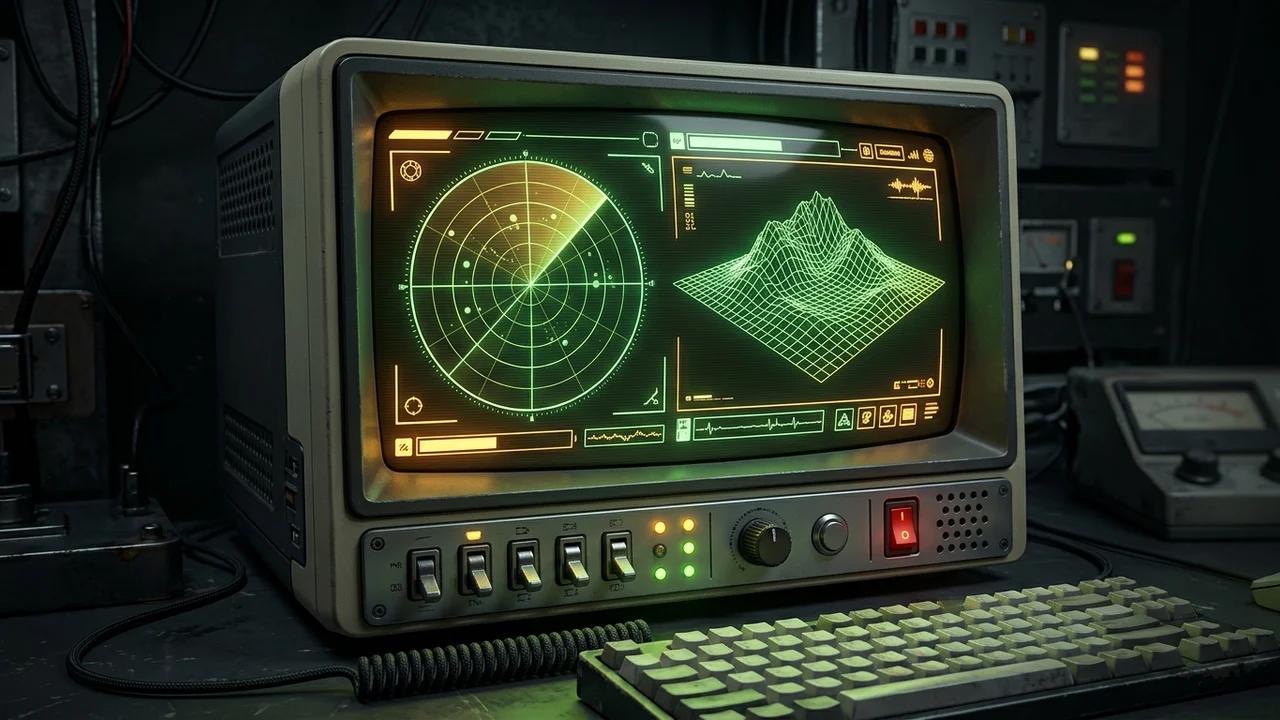
Phosphor-green and amber glyphs, subtle CRT scanlines and physical indicator switches turn pure interface design into gripping atmosphere.
Core Visual Rules
- 01Restrict the display to two or three phosphor hues over deep charcoal
- 02Keep scanlines and curvature subtle so typography stays razor-sharp
- 03Treat windows, switches and warning lamps as tactile interactive toys
A dream fit for roguelike builders, deduction mysteries, control-room sims and eerie narratives—unbeatable solo/AI art efficiency.
Production Specification
Suggested asset specification
- Core: crisp monospace typography, vector radar grids and modular window frames
- Accent: subtle scanlines, screen bezel and toggle switches
- Feedback: amber alert blinks, green confirm bars and matrix meters
Motion and feedback
Blinking cursors, typewriter logs, rolling counters and clicky switch states achieve high polish with lightweight code-driven motion.
Main production effort
Near-zero heavy illustration overhead—strong layout, typography, icons and sound design carry the entire aesthetic.
Start with this small scene
A phosphor-green CRT dispatch console displaying a vector route grid, three pulsing delivery nodes and a physical launch toggle.
Simplify for a smaller budget
Start with one phosphor color (green or amber) plus one red alert hue, building every graphic from simple grid vectors.
What to check
Is the screen comfortable after five minutes, and do numbers remain crisp without bloom blurring on small displays?
Common pitfall
Cranking chromatic aberration, jitter and heavy scanlines causes eye strain in 30 seconds—keep CRT shaders whisper-subtle.
Real Cases & Prompts
- P1Balatro
Observe how subtle CRT scanlines, gentle screen curvature and crisp pop-out numbers amplify every scoring cascade.
Study how a restrained analog desk, clear workspace zones and physical stamps build intense storytelling through UI alone.
Ready-to-Copy Visual Prompts
Retro CRT terminal & desktop. Restrict the display to two or three phosphor hues over deep charcoal. Keep scanlines and curvature subtle so typography stays razor-sharp. Treat windows, switches and warning lamps as tactile interactive toys. A phosphor-green CRT dispatch console displaying a vector route grid, three pulsing delivery nodes and a physical launch toggle.
Retro CRT terminal & desktop. Core: crisp monospace typography, vector radar grids and modular window frames|Accent: subtle scanlines, screen bezel and toggle switches|Feedback: amber alert blinks, green confirm bars and matrix meters. Blinking cursors, typewriter logs, rolling counters and clicky switch states achieve high polish with lightweight code-driven motion.. Is the screen comfortable after five minutes, and do numbers remain crisp without bloom blurring on small displays?
Style Forge · Pair with a Mechanic
Retro CRT terminal & desktop
Phosphor-green and amber glyphs, subtle CRT scanlines and physical indicator switches turn pure interface design into gripping atmosphere.
Hidden roles and credibility
Players hold private information and conflicting goals; claims may be truthful or misleading, so compare evidence before voting.
Related entries
Limited dither
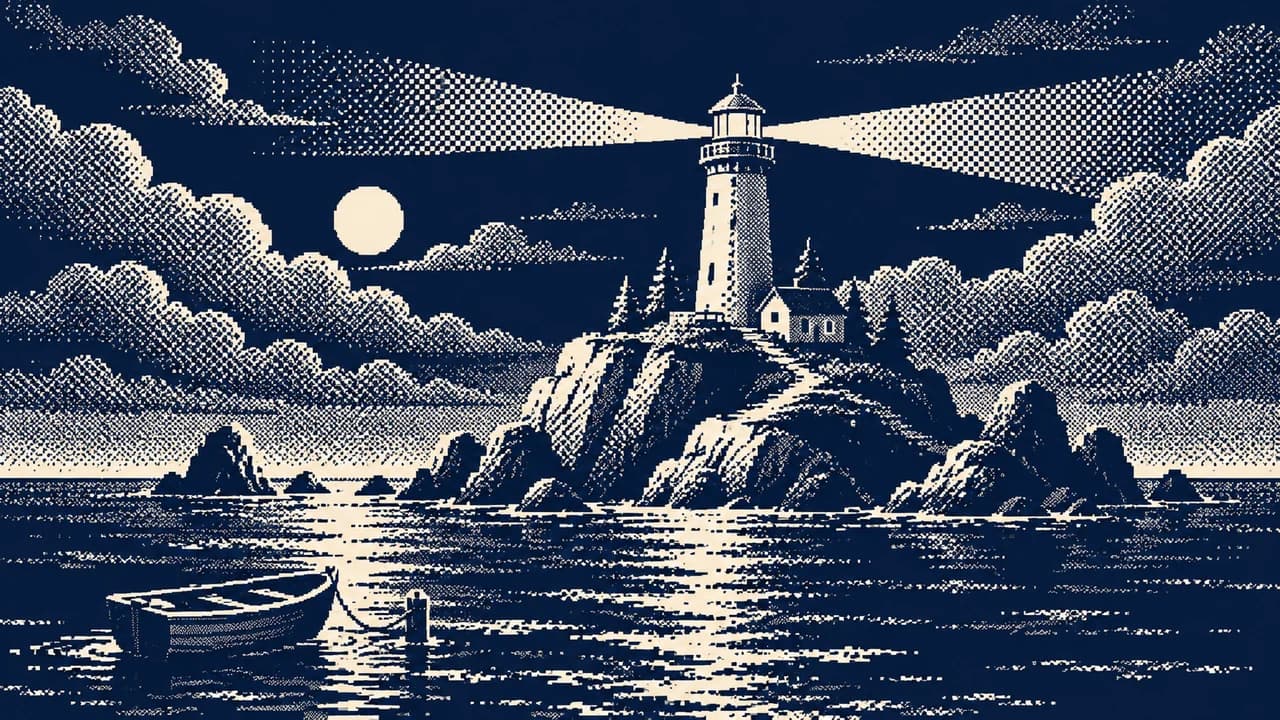
When there are too few colors for a gradient, a fixed dot pattern mixes two of them into a middle tone. The texture comes from the limit, and shadow has a pattern.
Pixel
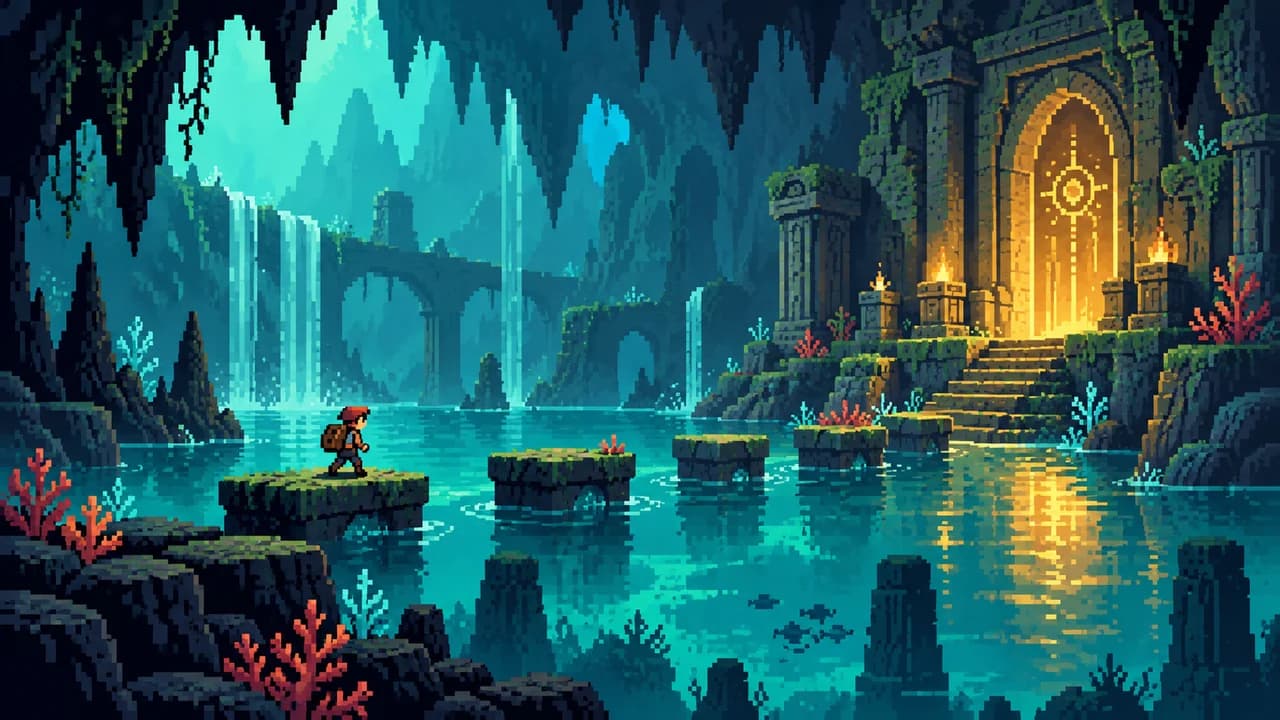
Aligned color blocks and a small palette explain the character, the ground, and the danger. Clarity comes from silhouettes and a few keyframes, not from tiny brushwork.

Minimal geometry
Use circles, squares, lines, and a few colors. Every shape needs a job. Decoration that does not help a decision comes out.
Atlas covers include game reference images and original illustrations. Reference images are credited on the entry page and belong to their respective rights holders. Prompts and prototype ideas are original drafts for new games.